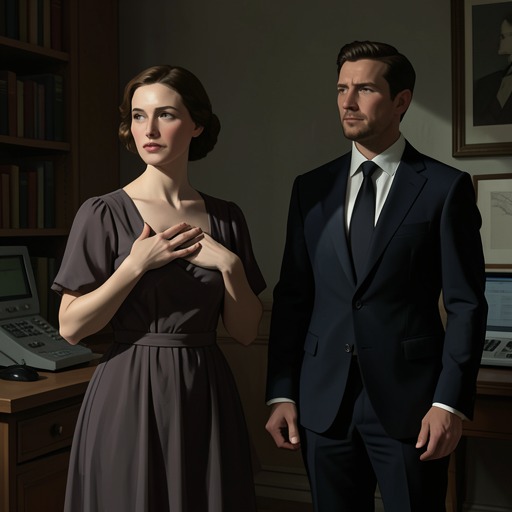
Miquel Moliner’s tuberculosis
The Shadow of the WindMiquel Moliner’s tuberculosis is the illness that shadows his final years, following his eviction and impoverishment and preceding his secret marriage to Nuria Monfort. It transforms their friendship into a shared life organized around care, while placing a limit on their future. The disease also frames Miquel’s last reunion with Julián Carax: the two friends meet as one is a fugitive and the other is dying.
Diagnosis and Decline
In the winter of 1934, Miquel’s brothers forced him out of his home on Calle Puertaferrissa, seeking to strip him of the books and independence they resented. When Nuria went looking for him, she found that he had been living in a cramped pension room on Calle Canuda. She brought him to her home. He was coughing and emaciated, but dismissed his condition as a lingering cold; within two weeks, he had worsened.
Nuria initially did not recognize the blood on the sleeves of his black clothes as a sign of how ill he was. A doctor, called only after the deterioration became unmistakable, diagnosed tuberculosis and rebuked her for waiting so long. Miquel was bankrupt as well as sick, living on memories and regrets. The illness therefore arrived amid the material losses that had already narrowed his life, rather than as an isolated medical crisis.
Marriage and Care
Miquel and Nuria married on a cold February morning in a county court. Their honeymoon was a bus ride to Guell Park, where they looked down over Barcelona from its terraces. They kept the marriage secret from Cabestany, Nuria’s father, and Miquel’s family, who believed him dead. Nuria eventually wrote to Julián to tell him, but never sent the letter. Their private marriage gave their relationship a new form just as Miquel’s illness made their time together uncertain.
Nuria describes Miquel as outwardly trying to remain strong even as his posture and cough betrayed his decline. He met her each afternoon after work, taking her for a snack or to window-shop on Calle Fernando, then returned home to work late into the night. She treasured these hours and understood that he loved her deeply. At the same time, she regretted that she could not return that love with the same completeness, because she remained emotionally attached to Julián. Her account holds gratitude and remorse together rather than presenting care as a simple resolution of the past.
By late 1935, Miquel’s doctor warned that he needed rest and a change of air, not continued exposure to the conditions of his work in Barcelona. The doctor said he could do little to fight the tuberculosis unless Miquel slowed down. Nuria went home intending to speak with him, but heard a visitor inside and hid on the attic landing. The man, whom she later recognized as Laín Coubert, left Miquel shaken. His visit and the illness belong to the same period of mounting pressure, though the account does not claim that one caused the other.
The Reunion with Julián
When Julián and Miquel meet again after more than ten years apart, their circumstances have sharply diverged. Julián is a fugitive; Miquel is a dying man. They take refuge in a café, away from the entrance and windows. Miquel cannot eat, while Julián, plainly hungry, eats for both of them. The scene makes their reunion a reckoning with both friendship and lost time: each wonders whether their lives have been shaped by the hands they were dealt or by the choices they made.
Julián thanks Miquel for what he has done for him over the years. Miquel refuses the thanks, saying that he acted both from obligation and from his own desire. His answer gives their friendship a reciprocal dimension: Miquel’s help is neither erased nor treated as a debt that Julián can settle with a single expression of gratitude. The reunion occurs under the pressure of Miquel’s decline, giving their exchange the force of a last meeting without making the illness itself the explanation for every choice between them.
Narrative Significance
Miquel’s tuberculosis connects bodily decline to the material and emotional conditions surrounding him. His eviction leaves him without a home; poverty and illness converge; and the work he continues despite the doctor’s warning competes with the rest his condition requires. Nuria’s account, in turn, gives prominence to the ordinary acts through which their marriage exists: finding him, bringing him home, sharing a modest outing, and making time for one another around work and worsening health.
The illness also shapes how the story presents loyalty. Miquel’s care for Julián precedes their reunion, while Nuria’s care for Miquel develops within a marriage she keeps secret. Their final meeting brings those bonds into one scene, but does not resolve the losses or regrets each carries. Tuberculosis is thus both a concrete, diagnosed disease and the condition that makes their remaining time together newly pressing; the narrative’s emphasis rests on what friendship and care mean within that time, not on a triumph over illness.